For three days the Artisan Village becomes an open building site with debates, workshops, exhibitions and installations
From Friday 17 to Sunday 19 April, after last year's successful first edition, Alberi Festival returns to Modena, once again transforming the Villaggio Artigiano Modena Ovest (Craftsman's Village Modena West) into a large open building site: a space for research and experimentation that anticipates the 2027 edition of Alberi Festival and raises a simple and radical question: what happens if we start designing the city from trees?
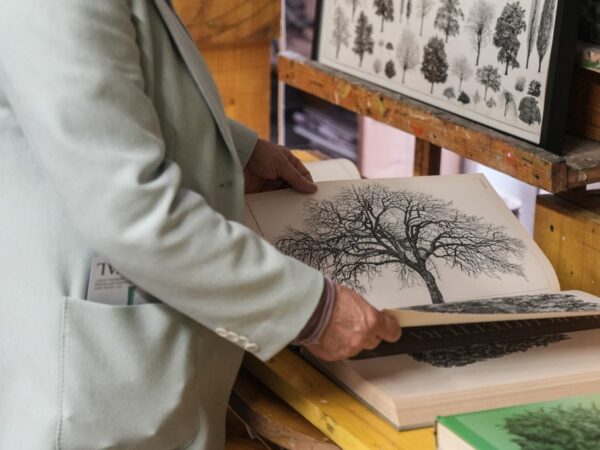
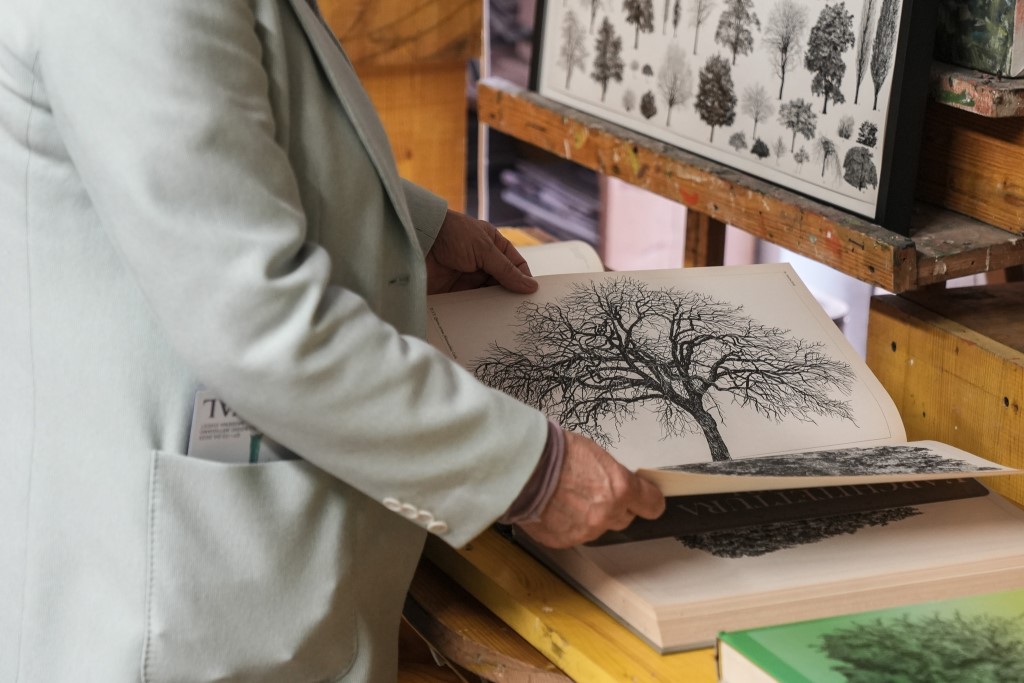
The festival was born from a strong intuition, cultivated by the Culture Department of the Municipality of Modena together with the Fondazione Archivio Leonardi: trees are not furniture, they are not margins, they are not aesthetic complements. They are a model and a tool for rethinking urban space. The inspiration is rooted in the famous drawings by Cesare Leonardi and Franca Stagi, preserved in the house-studio on the corner of Viale Emilio Po and Via Nicolò Biondo, the result of pioneering research that culminated in the volume "L'Architettura degli Alberi" of 1982, still an international reference for green design. In that work, a reversal of outlook is made: trees are not inserted inside the city, but the city is imagined starting from the trees.
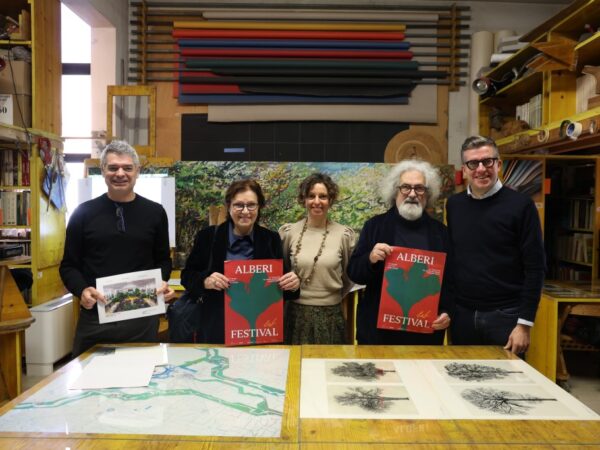
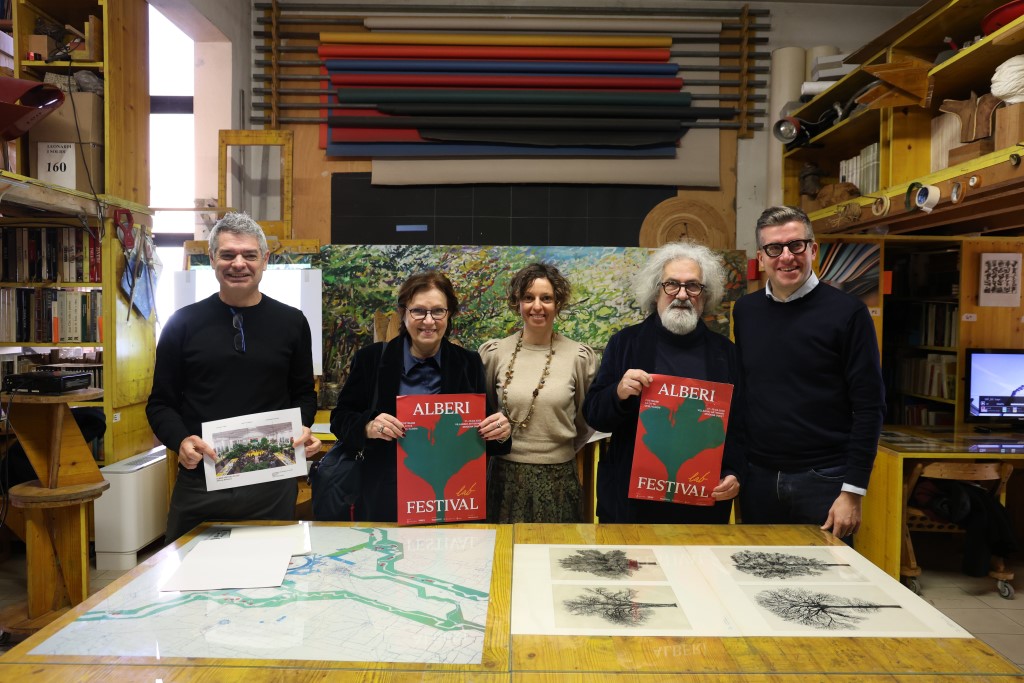
The programme of Alberi Festival Lab was presented this morning in the Leonardi house-studio by the councillors for Culture and Urban Planning and Parks of the Municipality of Modena, Andrea Bortolamasi and Carla Ferrari, by Andrea Cavani for the Leonardi Archive Foundation, representing the curators of the Festival, and by Beppe Cottafavi, editorial director of Il Dondolo and creator of the literary workshop 'Writing Nature'.
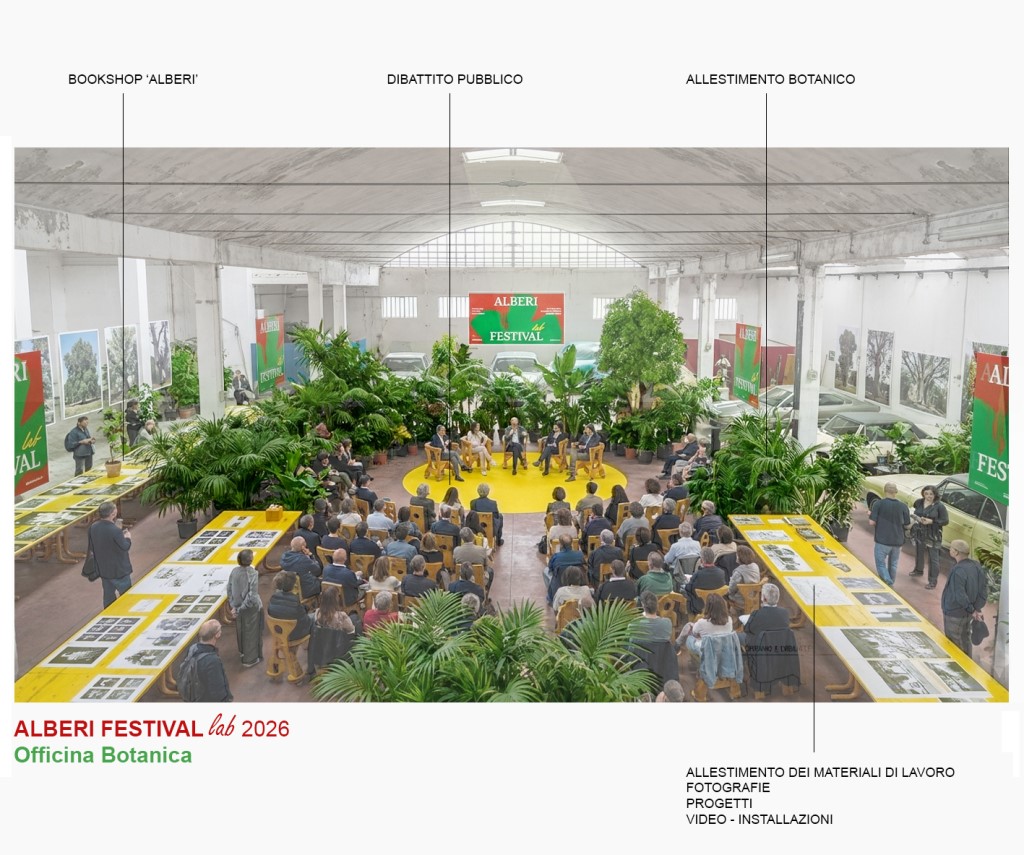
The backbone of the programme is formed by the four discussion panels that mark the days of 18 and 19 April, involving scholars, designers, artists, administrators, stakeholders and citizens in an open discussion. "Knowing how to see trees" focuses on knowledge as a condition for fertile coexistence between man and nature. Plant pathologists, agronomists, arboriculturists and palaeobotanists reflect on how careful and conscious observation of plant life can generate a new vision of urban space. Guests include Giovanni Morelli, Francesco Ferrini and Giovanna Bosi. "The Metamorphosis of Trees" explores the theme of process, of the continuous change that characterises plant life and becomes inspiration for artistic practices and visual experimentation, in a dialogue between creative disciplines and scientific research. Participating artists are Giacomo Cossio, Chiara Lecca, Luca Boffi, Francesco Bocchini and Guido Scarabottolo. "The City of Trees" addresses the issue of participation, showing how the construction and care of public space can become an opportunity for community and co-responsibility. Sabina Lenoci, Carla Tedesco and Giulio Focardi discuss this, bringing to the table concrete experiences of parks built and managed in a participatory manner. "Progettare con gli alberi" finally looks at the constructive dimension, considering trees as real living infrastructures, capable of generating urban quality and sustainability, with contributions by Annalisa Metta, Carlo Masera and Cesare Mazzocchi, among others.
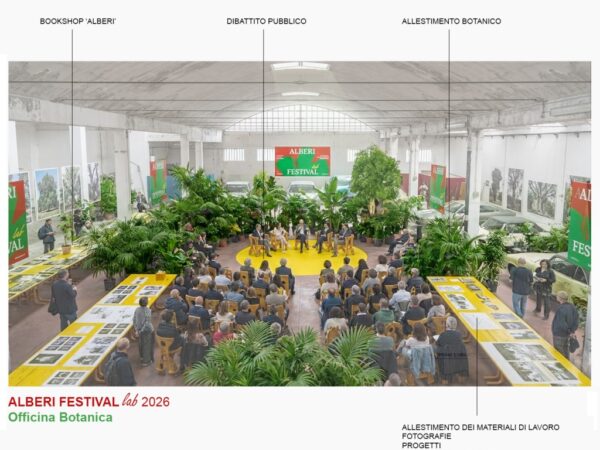
A diffuse system of exhibitions, installations and workshops develops alongside the tables. The pivot is the Officina Botanica, an experimental green regeneration project set up in a former industrial shed in the Village and directly connected to the Leonardi house-studio. Here nature and architecture enter into a concrete relationship, giving shape to a space that among plants and trees holds works of art, photographs, maps, drawings and archive materials. The artists involved include Marina Caneve, Giacomo Cossio, Giulio Costa, Francesco Fantoni, Alessandro Lupi, Marino Neri, Beatrice Pucci, Guido Scarabottolo and Francesca Zoboli.
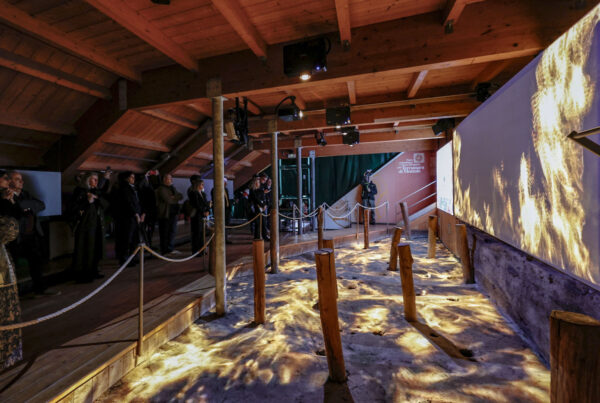
Exhibitions specially produced for the festival include 'They might be giants (in the city)', dedicated to monumental trees, the exhibition of historical photographs of Modenese parks from the city archives, the video installation 'A walk among the trees' born from a public call, 'Drawing trees' with the work of schools, the architectural installation 'The rampant baron' and the sound installation 'We, trees'.
Public participation is an integral part of the project. Two open calls invite people to actively contribute: "A walk among the trees" through which everyone can send in short videos of walks among parks and green areas shot in Modena or other cities until 21 March, which will become an immersive installation during the Festival, while "Bring your plant to Alberi Festival" involves citizens in the collective setting up of the Officina Botanica, asking them to bring a potted plant.
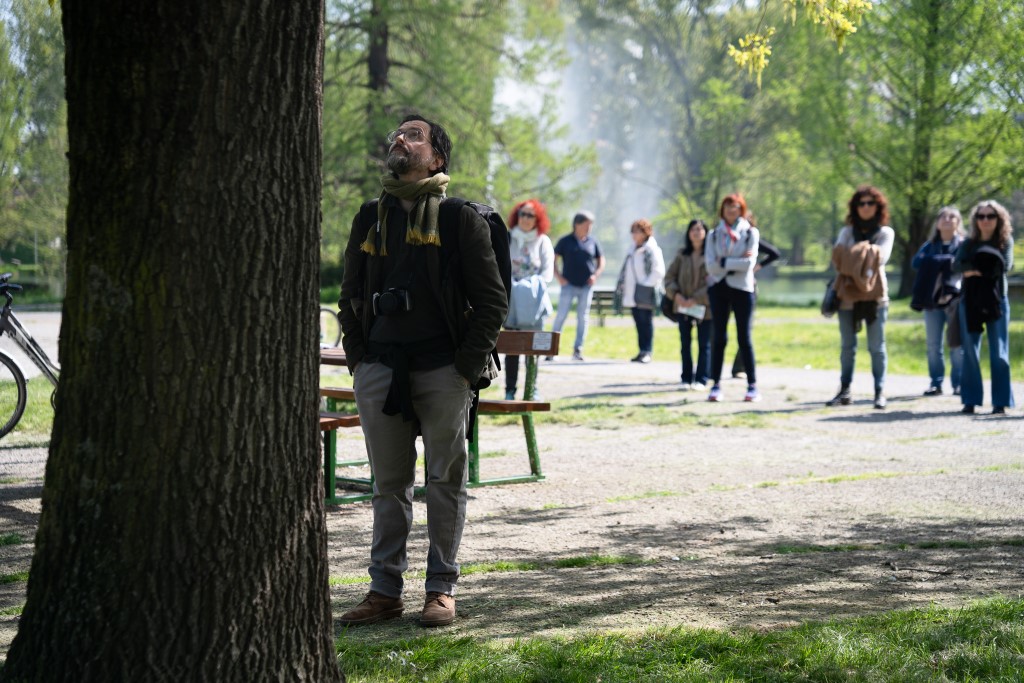
The Festival is also physically rooted in the Artisan Village through the planting of new trees along the streets, consolidating the experimentation begun in 2025 and concretely verifying the constraints and criticalities of a city that aspires to be both human and tree-friendly.
On Saturday 18 April, the pavilions stay open until midnight and a botanical dinner in a special location extends the experience into a convivial dimension.
Also returning is the much-loved tree bookshop/library, set up in cooperation with the city libraries, the publisher LazyDog and Feltrinelli, and which this year will have a yellow wooden set-up not to be missed where you can read or browse through a rich selection of books on trees and nature.
Alberi Festival Lab is realised by the City of Modena and the Leonardi Foundation, with the support of the Emilia-Romagna Region, the Chamber of Commerce of Modena and the Bunker studio for visual identity, graphics and web. Partners in the project are the cultural institutes of the city, Amigdala, University of Modena and Reggio Emilia, AGO Foundation, Municipality of Pavullo, Municipality of Vignola and Municipality of Nonantola
All information on the Festival, programme updates, workshops, guests and open calls can be found on the website www.alberifestival.it