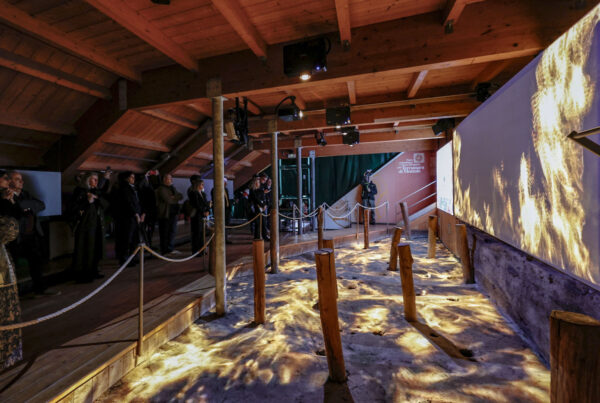
To create a veritable gateway, both physical and virtual, to the city's cultural and museum system that is being developed in the Palazzo dei Musei di Modena with the projects on Sant'Agostino and the building site already underway in the former Ospedale Estense. More than 2,500 square metres on the ground floor of this building, which will soon also be made accessible from the Palace entrance on Piazza Sant'Agostino, will be redeveloped, almost 1,500 of which will be given over to new exhibition, reception and laboratory spaces, with the creation of a multimedia and interactive area, also with an immersive character, to enhance the heritage of the Civic Museum, the Municipal Historical Archive and the Poletti Library. At the same time, a process is underway to digitise thousands of works in the Museum and Archives to facilitate their conservation, access and enhancement.
These are the main features of the 'Open Gate, the new city gate' project approved by the council, at the proposal of Culture councillor Andrea Bortolamasi, in order to apply for the Ministry of Culture and Tourism's Culture Fund notice. The project has a total value of one million 390 thousand euro and is counting on ministerial funding of one million euro, which is the maximum possible, with co-funding that far exceeds the 20 per cent required by the criteria of the call.
The project has been developed by the Municipality of Modena (Civic Museum, Historical Archive and Historical Building Service) with the collaboration of the Department of Architecture of the University of Bologna, as part of the initiatives that develop the dialogue between technological innovations and digital tools applied to cultural, artistic and architectural conservation, protection and fruition. These themes refer to digitalisation as a necessary means to contribute to the sustainable development policies set out in the United Nations 2030 Agenda and explicitly recall the work in progress for the candidature in the Unesco Creative Cities network. The project's frame of reference is therefore one that, in addition to the cultural institutes, involves the Open Laboratory, Fem, the Ex-Foundries recovery project with the Dast, the Data Centre and the use of big data for training.
The resolution also indicates among the objectives the development of the capacity to intercept and engage the public through the use of digital resources in a multimedia perspective and the possibility of improving accessibility and usability of works and documents thanks to new technologies and data interoperability.