Modena will represent Italy at Unesco, in Paris, in the final selection for recognition as a Unesco Creative City in the Media arts cluster.
In fact, in a letter sent to the mayor Gian Carlo Muzzarelli on Thursday 24 June, the Unesco national commission announced that it had approved the candidature presented by the Municipality of Modena, emphasising that the project presented 'reveals the city's strong commitment to contributing to the achievement of the Network's objectives and the existence of development strategies to strengthen the role of creativity in the socio-economic development of the city, in line with the sustainable development objectives of the United Nations' Agenda 2030'.
"We have passed the first selection and we can say with great pride that we are now in the finals," is the comment of Mayor Muzzarelli, who reiterates how "joining the Network of UNESCO Creative Cities is a great opportunity in which the municipal administration has believed since the beginning of this path: culture is a decisive sector for the rebirth of our community after Covid, in terms of employment, enhancement of places and resources, and personal and collective growth of citizens.
Nine Italian cities submitted their candidacy to the Unesco National Commission, which could only select two. In addition to Modena for Media Arts, Como was chosen for Crafts and Folk Art: both will compete for the final selection by Unesco, which will be held in Paris in October, to enter the Network that is currently composed of 246 cities in about eighty countries on five continents. In Italy, there are currently eleven creative cities.
'We are very happy,' says Culture Councillor Andrea Bortolamasi, 'with a first result that is already an acknowledgement of the great work that began last April, in the middle of the lockdown. Now that we are in the finals, we want to get there prepared and play our best to be the first Italian city in the media arts cluster'. Bortolamasi emphasises, therefore, that the candidacy was the result of a network project 'that brought together the city's cultural fabric. A joint effort that was recognised and appreciated by the president of the Italian commission Franco Bernabé in accepting our candidacy'.
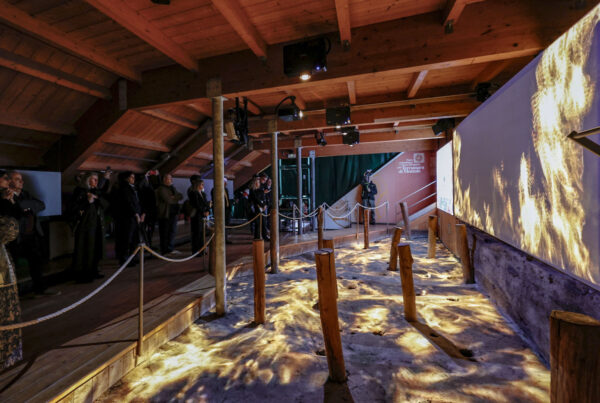
The communication approving the candidacy also highlighted the strengthening of international cooperation through artistic co-productions, digitisation and the use of media for greater dissemination of art and wider access to culture for all, and the completion of the transformation of disused places into 'cultural factories'. In the action plan presented, the innovative use of immersive reality technologies and the education of the public in the avant-garde of contemporary art permeated with contaminations between art, culture and the digital world were also considered of particular interest.
Bortolamasi comments, "Both the intention of redeveloping industrial and post-industrial spaces by transforming them into cultural containers, and the Modenese declination of media arts have been fully grasped: a city where an actor and an engineer, a philosopher and a computer programmer dialogue and collaborate to give life to new cultural products, and where digital innovations and new computer applications are at the service of culture and humanistic knowledge, and vice versa. This,' adds the councillor, 'has led our city to become a fertile territory for the cultural and creative industries, where education passes through new media and computer languages and art finds digital and innovative expressions'.
The project nominated by the Municipality of Modena, sent to the Unesco National Commission on 31 May, was drawn up as part of a process in which the Fondazione di Modena, Fondazione Brodolini - Laboratorio Aperto, Fmav, Gallerie Estensi, Unimore, Fem, Ert, Fondazione Teatro Comunale, Art-ER, Fondazione Collegio S. Carlo also participated, becoming part of the promoting committee.
The guidelines of the candidacy are the contamination of different genres and languages, with projects dealing with the relationship between digital innovations and transformations with music, dance, figurative and visual arts, and theatre; urban transformations of the city, with the creation of new cultural containers; and the focus on digital culture as a useful tool for the greater enjoyment of cultural activities.
The aim of the Unesco Creative Cities Network is to promote knowledge, cooperation and projects among cities that have identified culture and creativity as the driving forces of their development. The watchwords are collaboration, sharing of knowledge and good practices, confrontation, planning, valorisation of intangible cultural heritage.